
哔哩哔哩
巨人网络:上半年净利21.44亿元增176%,拟拿出超七成利润分红_我的网站

A | 获悉,巨人网络公告,2026年上半年实现营收46.89亿元,同比增长182.08%;归母净利润21.44亿元,同比增长175.96%。

B |
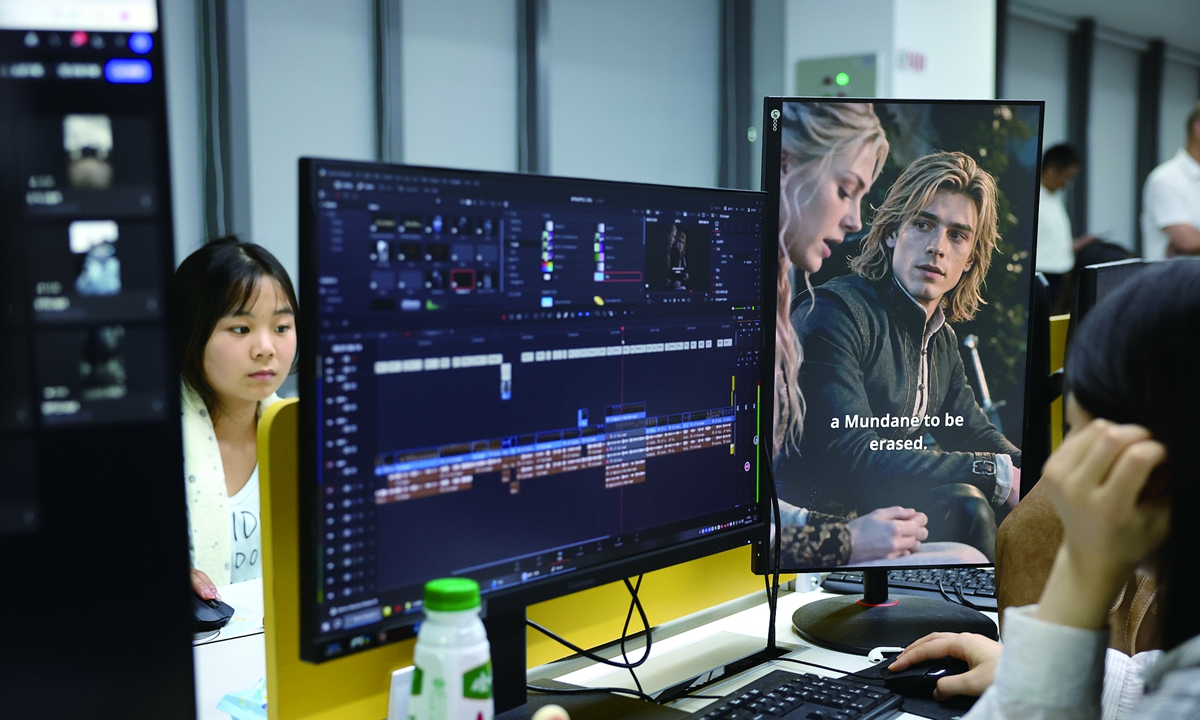
Open Douyin, the Chinese version of TikTok, and AI-generated short dramas are hard to miss.
The stories span almost every genre familiar to Chinese audiences, from fantasy and immortal cultivation to urban romance and period tales.
The biggest difference is that the actors, settings and even many of the visual elements are generated by artificial intelligence (AI).
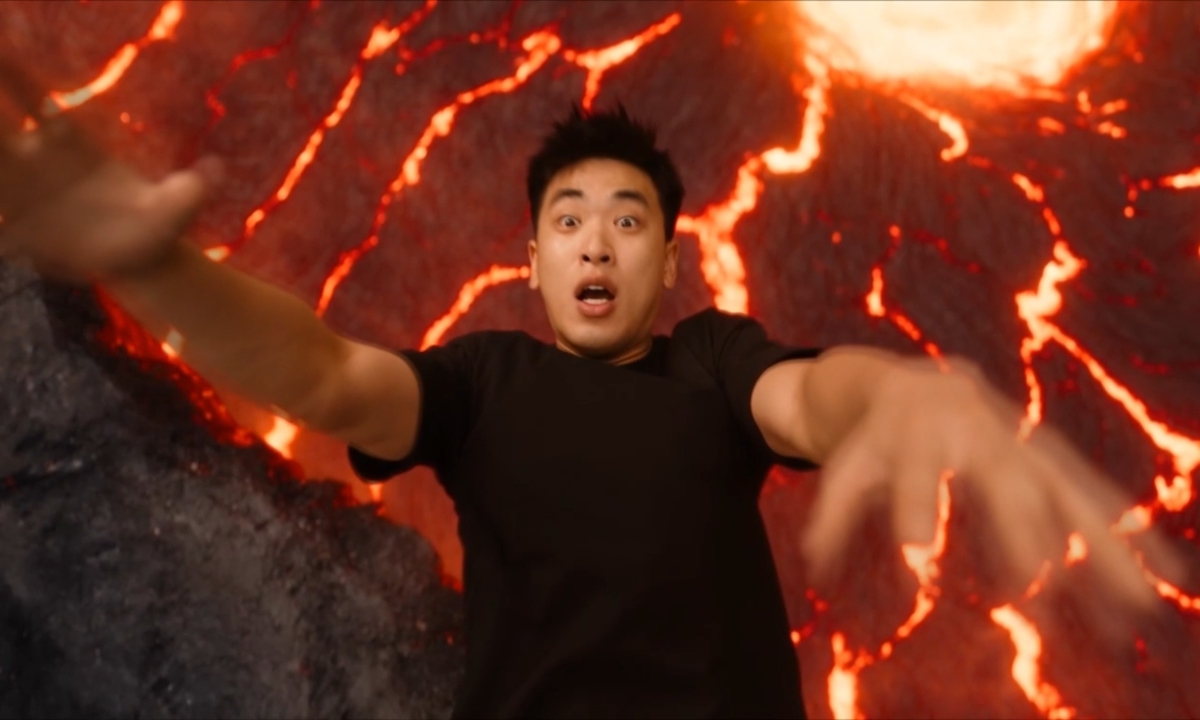
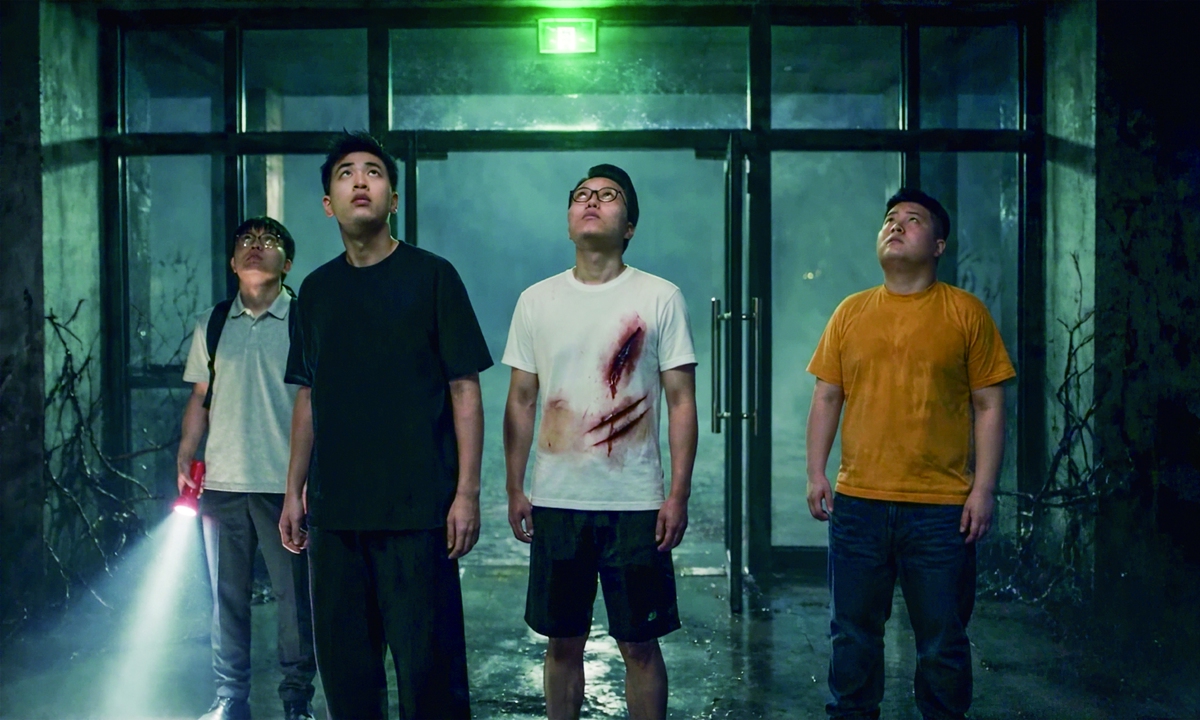
One of the latest hits is The Inverse Zone, an original mystery-thriller about monsters that has been dubbed an AI version of Stranger Things. The series has released three episodes so far, each receiving more than 1 million likes on Douyin.
Yet the team behind it consists of just three people, all born after 2000.
While Hollywood is still catching up with the short drama boom, China's short-drama industry is already moving into the AI era.
For many young creators, AI is not just another tool - it is a door that small teams could never have opened before.
"We've always wanted to make professional film and television content, with visual language, complete storytelling and a cinematic feel," Hu Hai, a member of the team behind The Inverse Zone, told the Global Times. "But the cost and barriers of live-action production were too high. Small teams had little chance to realize high-quality film and television projects."
As increasingly capable domestic AI models emerged, that door began to open. "The maturity of AI creative tools made us see new possibilities," Hu said.
The explosive growth of AI-generated short dramas is a double-edged sword: It opens doors for some, but leaves many in the industry uncertain about what comes next. Many actors who once benefited from the short-drama boom are now finding work increasingly scarce, with some turning to other professions. Meanwhile, the use of celebrities likenesses in AI-generated content (AIGC) has ignited a fresh wave of debate.
Where is the industry headed next? Global Times reporters spoke with AI creators, short-drama actors and industry experts about the opportunities and uncertainties ahead.
Lowering barriers
Hu studied directing and filmmaking in college. His team initially focused on short comedy videos, a field with relatively low production costs and less barriers to entry. But after years of producing this type of content, they eventually reached a creative plateau. That began to shift as more advanced AI tools came onto the scene.
To produce The Inverse Zone, the team used domestic video-generation models Seedance 2.0 and 2.5. The series took nearly two months to prepare, including world-building, character design and establishing a consistent visual style. "Seedance is the best in the world. It's extremely advanced. There's no model in Europe or the US that is more useful than it," Hu told the Global Times.
The technology does not mean production is effortless, however.
According to Hu, a typical episode costs around 4,000 to 5,000 yuan ($593-$741) to produce, while episodes involving large-scale scenes, complex special effects or demanding lighting and rendering can cost more than 10,000 yuan.
The team used AI for image generation, basic voice work and material rendering, while humans remained responsible for the script, character development, cinematography and post-production.
"The soul of the entire series is still controlled by people," Hu said. "All the key creative decisions are manually adjusted and repeatedly reviewed."
Ya Cen, operations head of AI video platform LibTV, told the Global Times that the AI short-drama ecosystem is now characterized by small teams, high productivity and strong individual styles. "The most direct value of AIGC is that it has lowered the geographic and financial barriers to film and television production," she added.
Actors in AI era
Yet the rise of AI short dramas is also creating new tensions.
AI-generated characters are now building fanbases, landing brand endorsements, and being described as the next generation of digital stars. At the same time, many celebrities including Taiwan actress Joey Wong have reportedly given permission for their younger likenesses to be used in AIGC.
The impact extends beyond celebrity likenesses. It is also being felt by people who once benefited from China's booming live-action short-drama industry.
The short-drama boom created opportunities for large numbers of actors, many of whom could quickly become recognizable faces. However, as AI-generated productions expand, some performers are finding fewer acting opportunities and turning to other professions.
Chongqing native Luo Xinyuan, 21, has experienced that shift firsthand.
She spent more than a year in Hengdian, East China's Zhejiang Province as a short-drama actress. Since May, she has worked at a scenic area playing Huang Rong, a character from a classic Chinese martial arts novel The Legend of the Condor Heroes.
"When short dramas were at their peak, there were lots of fast-paced, feel-good stories," Luo told the Global Times. "But that kind of content is difficult to sustain. Without richer and more meaningful stories, the pressure from AI short dramas will make things even harder."
For many short-drama actors, the disruption is likely to be structural rather than an immediate wholesale replacement, Zhang Peng, a cultural researcher and associate professor at Nanjing Normal University, told the Global Times. The question of celebrity likenesses may prove even more complicated.
Zhang warned that unrestricted authorization could raise concerns over control and revenue sharing. Without clearer rules, the technology could put further pressure on ordinary actors.
The next stage may not be a choice between humans and machines, but a new production model in which the two increasingly work together.
For creators such as Hu, that possibility is already here.
"AI has finally given young creators like us the opportunity to realize the film and television dreams we've had for years," he said.
。

C | 公司同步披露2026年半年度利润分配预案,拟现金分红15.15亿元,约为上半年归母净利润的70.65%。
Current article:http://www.xiongpeiduanlouduoennongleng.cyou/pewb9vy/20260826/24455.htm
Published on:00:12:56
最新文章
- 1 dead, 2 injured by gunshots near a pro-democracy protest in Guatemala
- 片岡篤史氏 広島で気になる泥臭いタイプの長距離打者「緩急に対応できれば」
- 华为与惠普签署专利交叉许可
- 中央网信办深入推进网络娱乐团播乱象整治工作
- 中美GEO大比拼:为什么国内GEO雷声大雨点小?
- 9艘“闽造”海工船舶启航非洲
- 记者:阿尔瓦雷斯昨晚身体不适睡得不好,将缺席马竞今日训练
- Explyt团队打造的代码智能体评测新标准:光靠“通过/失败”根本不够用
- 极智嘉详解机器人战略,具身智能子公司开放融资
- 同比增长230% 小鹏汽车5月交付新车33525台 连续7个月交付超3万台
标签云
热门文章
- Protesters march in Panama against the contract extension for a huge copper mine
- 美国自掘“太阳能之坟”
- 英国医院试验新的皮肤癌疗法 可在数秒内无痛杀死癌细胞
- 경산서 실종 中유학생 살해 피의자, 여장한 채 동대구역까지 이동
- 山东发布高温黄色预警:24至26日我省中西部或出现35℃以上高温天气
- “三五”规划正式公布 澳门迈向高质量发展新阶段
- गाजियाबाद के किसानों के लिए खुशखबरी, फ्री में बीज के लिए 31 अगस्त तक करें आवेदन
- 红米红米饭注7
- 17 Florida sheriff's office employees charged with COVID relief fraud: Feds
- 1套豪宅曾卖1.3亿元!40岁郜林当经理:工资只够油钱 但我毫不在乎