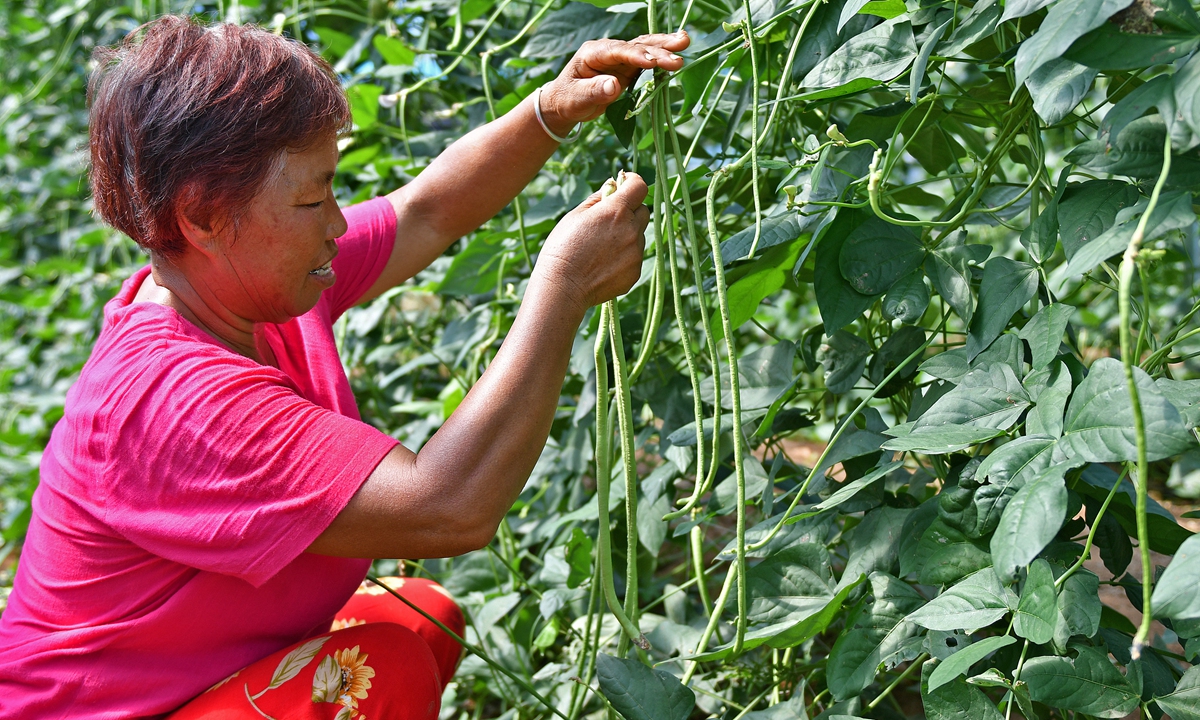
A farmer harvests green beans at a vegetable production base in Yantai, East China's Shandong Province, on August 21, 2024. Photo: VCGA viral internet joke about eating raw green beans for weight loss has recently put the humble vegetable in the spotlight. After news reports that a guy lost weight following food poisoning caused by undercooked beans, Chinese netizens jokingly dubbed them a "forbidden weight-loss hack." Others took the joke even further, asking — tongue firmly in cheek — exactly how undercooked the beans needed to be to achieve the "best weight loss effect." For residents of East China's Shandong Province, however, green beans have never been a miracle diet food or an internet meme. Instead, they are an unmistakable sign that summer has arrived — and, for many families, the beginning of weeks of eating them, giving them away and wondering how on earth there are still more waiting to be picked. The season of endless beans For Zhao Qian, a Shandong native, summer has always had a familiar color: green. "When I was little, the moment different bean dishes started appearing on the table day after day, I knew summer had arrived," Zhao told the Global Times. "No matter how many we ate, there were always more. It was as if the vines kept producing beans overnight." A Chinese saying goes, "Eating beans in summer is better than eating meat." Heat-loving green beans have been cultivated in China for more than one thousand years. Originally introduced from abroad, they gradually found a permanent place on Chinese dining tables thanks to their versatility, nutritional value and ability to fill hungry stomachs, according to an article published by People.cn. Today, with the rise of greenhouse farming and an increasingly sophisticated cold-chain logistics network, fresh vegetables are available year-round across China. The old rule of eating produce only in season has largely given way to year-round abundance. Yet in Shandong, China's largest vegetable-producing province, green beans remain inseparable from summer. More than an endless seasonal harvest, they have become the taste of home for generations of locals. One of Zhao's strongest childhood memories wasn't eating the beans, but preparing them. "Every summer, the adults would hand me a basin full of freshly picked beans and ask me to strip off the tough strings along both sides," she recalled. "I'd sit on a little stool and work through the whole pile. It looked like an easy job, but after peeling bean after bean, my fingertips would start to hurt. By the time I finished one basin, there was always another one waiting." For many families in Shandong, summer means an endless cycle of picking, eating and sharing green beans. In vegetable gardens, rows of trellises are soon covered in climbing vines. When the peak harvest season arrives, the beans need to be picked almost every day before they become old and fibrous. Those that cannot be finished at home are packed into bags and given to relatives, neighbors and friends. "Your family has beans, and so does mine, but we still give them to each other," Cao Yu, a Shandong native who grew up on the Jiaodong Peninsula in East China, told the Global Times on Wednesday with a laugh. A plentiful harvest also brings what locals jokingly call "bean freedom" to the dinner table. Sesame-dressed beans, braised beans with pork ribs and, above all, bean-filled steamed buns — a dish mentioned by almost every Shandong native interviewed by the Global Times. For many people, these dishes are no longer simply seasonal food, but the familiar taste of summer, family and hometown. The hands that harvest summer Behind the seemingly endless harvest is another busy summer ritual — picking. For many elderly farmers, harvesting green beans means spending hours each day moving from one trellis to another, reaching through dense vines and picking bean after bean by hand. A nail salon in Jining, Shandong Province, recently went viral after offering free "bean-picking manicures" to residents aged 60 and above. Instead of fashionable designs or glittering decorations, the salon applies thicker, longer nail extensions that make it easier to pinch and snap off the beans while protecting fingertips from pain. A coat of colored polish is added simply to help conceal stains left by vegetable sap, according to video clips circulating on Chinese social media platforms Douyin and Sina Weibo. The salon owner, herself the daughter of farmers, said thumb injuries and damaged fingernails are common during the bean-picking process. In videos posted on her Douyin account, many elderly women said the manicures made picking beans much easier. Even more amusingly, some older men initially refused to get a manicure, only to change their minds after hearing enthusiastic recommendations from the "grandmas' group." For perhaps the first time, beauty took a back seat to practicality, and a manicure became another way of caring for hardworking hands. While the internet continues to joke about undercooked beans as a shortcut to weight loss, doctors stress there is nothing amusing about eating them raw. Liang Jiajing, a clinical nutritionist at the Second Affiliated Hospital of Anhui Medical University, said raw or undercooked beans contain naturally occurring toxins that can cause nausea, vomiting, abdominal pain and diarrhea, but the toxins are destroyed through thorough cooking, according to a Jimu News report. The internet may remember green beans as the latest viral "weight-loss hack." In Shandong, however, they tell very different stories — one of overflowing harvests, bags of beans exchanged between neighbors, family recipes passed down through generations, and hardworking hands that quietly bring the harvest to the table. Long after the online jokes fade, the taste of summer — and of home — remains. 。



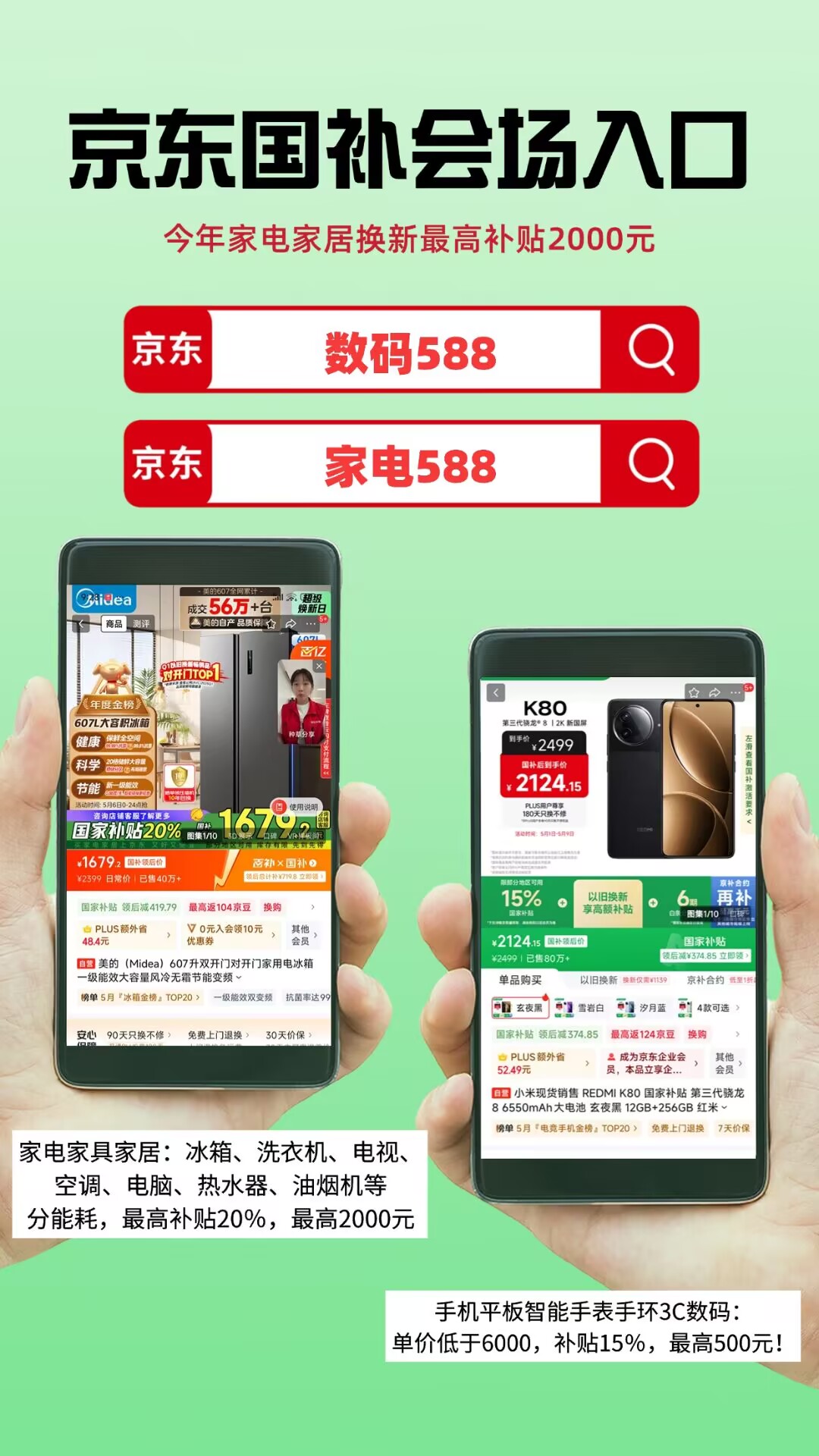
 领取方法 线上:以京东为例,打开京东 APP,手机数码类搜索「手机 588」或「数码 588」,家电类搜索「家电 588」进入政府补贴专区。选择所在省份(如本地未开通可选邻近城市),部分地区需跳转云闪付 APP 完成实名认证,确保京东账号与云闪付账号一致,点击立即领取资格券。选择标注政府监管补贴的商品,支付时必须使用云闪付完成付款,系统将自动抵扣补贴金额。 线下:需到政府公布的合作门店(如京东 MALL),携带身份证和购物凭证办理。 补贴范围 手机数码类:手机、平板、智能手表等,单价不超过 6000 元(折叠屏等超高端机型通常不参与),补贴比例为 15%,最高补贴 500 元。 家电类:包括冰箱、洗衣机、空调、电视、电脑、热水器、油烟机、灶具、微波炉、净水器、洗碗机、电饭煲等 12 类家电,新增了微波炉、净水器等。一级能效 / 水效产品补贴售价的 20%,最高补贴 2000 元;二级能效 / 水效产品补贴 15%,最高补贴 1500 元。
 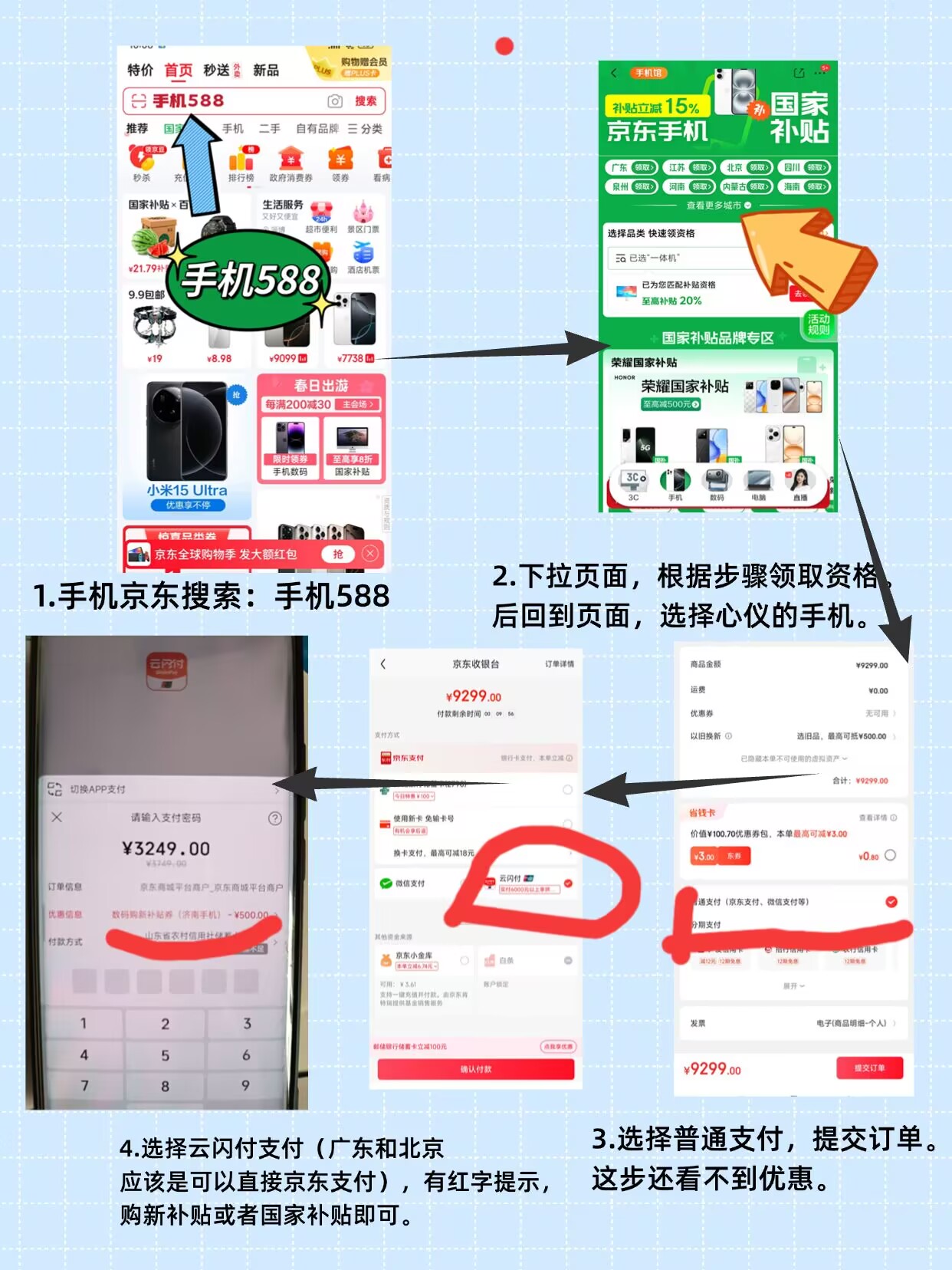 京东领取步骤 搜索入口:打开京东 APP,手机数码类搜 “手机 588” 或 “数码 588”,家电类搜 “家电 588” 进入活动页面。部分地区需跳转至云闪付 APP 完成实名认证,要确保京东、云闪付账号实名一致。 领取资格券:选择所在省份,若本地未开通,可选邻近已开通城市,点击 “立即领取” 绑定资格。部分省份需通过云闪付完成实名认证并领取补贴券。 选购商品:筛选标注 “政府监管补贴” 的商品,注意价格需≤6000 元,且商品需在政府白名单内。 支付核销:支付时必须使用云闪付,系统自动抵扣补贴金额。若未显示 “政府补贴 -XX 元”,需检查支付方式是否选错。 收货验机:快递员会现场拆封激活设备,核对 SN 码、IMEI 码并拍照存档。若未完成验机,补贴可能作废,补贴金额 7 个工作日内退回账户。 注意事项 实名认证:京东、云闪付账号需与收货人身份证信息一致,否则无法领取。 地域限制:收货地址需与领取补贴的省份一致,部分省份叠加地方消费券后补贴更高。

 国补政策截止至 2025 年 12 月 31 日,部分地区可能提前结束,建议尽早行动。领取时务必核对账号实名信息,选择正规渠道避免套路,享受优惠的同时保障消费权益,快抓住这波福利为生活升级吧!