
国庆请假休29天
The West’s ‘overcapacity’ narrative is economically illiterate: Josef Gregory Mahoney_我的网站

一 |
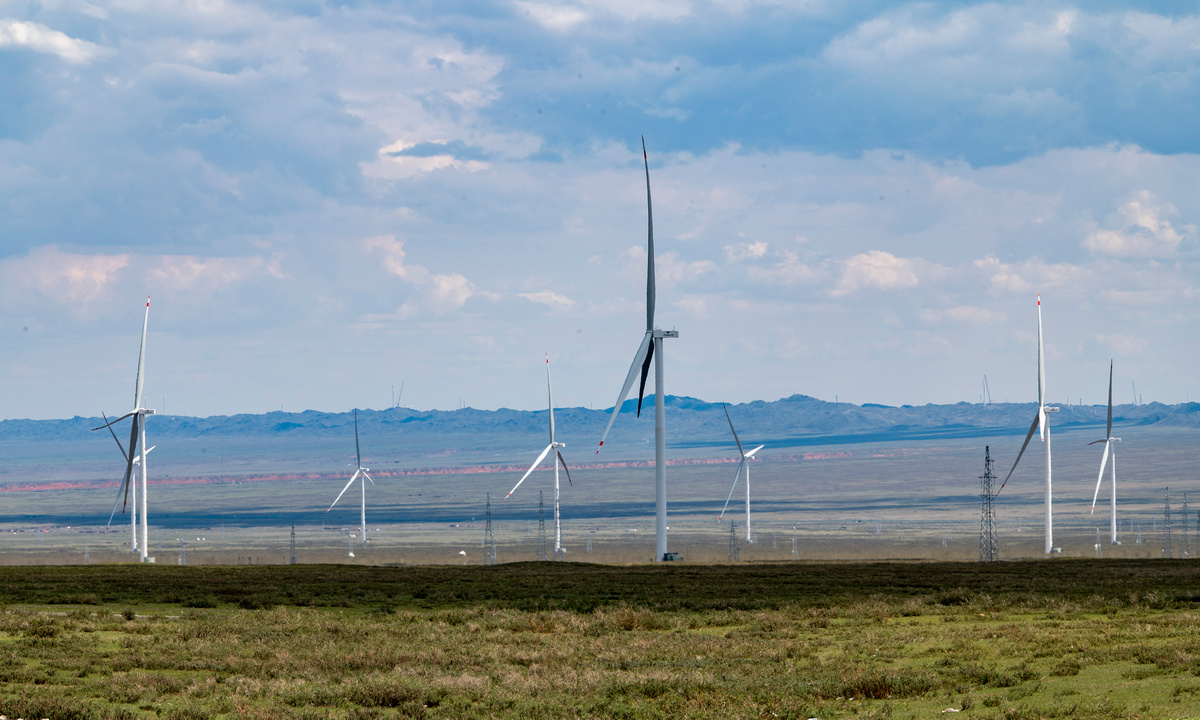
In economics, overcapacity is a dynamic and relative concept. Supply-demand balance is temporary, and imbalance is the norm. The Western narrative that equates the sheer scale of China's production capacity directly with "overcapacity" is, frankly, economically illiterate. It conflates size with pathology.
Consider the math. China's manufacturing sector accounts for roughly 30 percent of global manufacturing value-added - a dominance unmatched since the post-war US. Yet this reflects not overcapacity but competitive capacity. The critics ignore that China's trade surplus in 2025 reached a record $1.2 trillion, roughly equivalent to the GDP of a top-20 economy like Saudi Arabia. They ignore that Chinese exports carry high import content - foreign value-added accounts for nearly half of gross export value - meaning China's capacity integrates global supply chains rather than displacing them.
The judgment lacks rigor because it applies a static snapshot to a dynamic system. It assumes that if China produces more than it currently consumes domestically, the surplus is automatically "overcapacity." Nonsense. By that logic, Germany's persistent trade surplus in automobiles and machinery would constitute chronic overcapacity. It does not, because German capacity serves global demand. So does China's. The narrative isn't economics. It's politics dressed in economic jargon.
Western critics attribute the price advantages of Chinese green technology products to "government subsidies" and "market distortion." This is a convenient story. It is also wrong. The global competitiveness of China's green technology industries stems from four interconnected factors: massive domestic market scale, decades of sustained infrastructure investment, a highly educated STEM workforce, and fierce intra-industry competition. China's NEV purchase-tax exemptions, extended through 2027, total approximately 520 billion yuan ($77.05 billion). Substantial? Yes. But causally linked to overcapacity? No.
The causal chain critics imagine - subsidies → artificial competitiveness → overproduction - collapses under scrutiny. The EU's IPCEI battery programs allocated over 6 billion euros, plus EIB financing. The US CHIPS Act appropriated $54.2 billion for semiconductors, while the Inflation Reduction Act funnels hundreds of billions into clean energy. All major economies subsidize strategic industries. The difference is that China converted subsidies into systemic efficiency: its nominal lithium-ion cell capacity reached approximately 2.2 TWh by end-2023, driving global average battery pack prices down 20 percent year-on-year to $115 per kilowatt-hour in 2024. That is not distortion. That's innovation at scale.
Chinese firms filed 20,081 European patent applications in 2024 - 10.1 percent of the total, with battery technology patents surging 79 percent year-on-year. Patents reflect innovation, not subsidy dependency. The causal link between subsidies and overcapacity is weak; the link between scale, innovation, and competitiveness is robust.
Meanwhile, global demand for green and low-carbon transition is experiencing explosive growth. The International Energy Agency projects that renewable capacity additions must triple by 2030 to meet Paris Agreement targets. In this context, labeling China's wind, photovoltaic, and battery capacity as "overcapacity" is not merely wrong - it is dangerously counterproductive.
In fact, China's capacity has played an indispensable role in advancing the global energy transition. Chinese solar module production costs have fallen roughly 90 percent over the past decade. Goldman Sachs Research notes that China manufactured approximately 86 percent of global solar modules, 80 percent of lithium-ion batteries, and 68 percent of electric vehicles in 2024. This is not overcapacity dumped on foreign markets; it is capacity the world desperately needs.
The "overcapacity" label assumes a zero-sum game where Chinese production crowds out others. The reality is synergistic: Chinese capacity lowers global clean energy costs, enabling faster deployment worldwide. The "overcapacity" label holds only if one believes the world should slow decarbonization to protect less competitive producers and to empower those that deliberately employ "burn, baby, burn" tactics. That's industrial protectionism intersecting with brown imperialism, and it's disproportionately impacting the Global South, which is more vulnerable to climate breakdown, precisely when it's finally trying to shake off centuries of systemic Western exploitation and suppression.
Furthermore, the disparity in how the West treats its own industrial policy versus China's is glaring. When the US funnels $52.7 billion through the CHIPS Act for semiconductors, or when the EU subsidizes Airbus, or when American agricultural subsidies distort global food markets, the silence from Western media is deafening. When China gains an edge in manufacturing, it faces media offensives and policy restrictions.
This is not inconsistency. This is strategy. The underlying motivation is the "China threat" rubric - a framework that treats China's development itself as a danger to the Western-led order. Countries wagging their fingers at China do so not because China violates economic rules they themselves follow, but because China succeeds under rules they once wrote to their own advantage.
These accusers possess their own national industrial policies and subsidies. They have long exploited historical and contemporary advantages against China and developing countries. They have not competed well, have not provided themselves with good governance, and have not invested adequately in their own infrastructure, education, and R&D. They have allowed their own leading industries to seek monopolistic positions detrimental not only to others but to their own consumers. Rather than reform themselves, they blame China.
In these contexts, the cry of "China Shock 2.0" is the latest iteration of an old playbook: frame China's development as a threat to global stability rather than a contribution to global progress. The claim that China's advances in renewable energy and AI will send more serious shock waves than traditional manufacturing displacement is analytically flawed and politically motivated.
First, the premise is false. China is not reducing the market share of developed countries through unfair means; it is outcompeting them through innovation, scale, and efficiency. According to Goldman Sachs Research, China's "new three" green technology sectors alone contributed around one percentage point to the country's 5.4 percent nominal export growth in 2025. This is competitive capacity serving global demand, not overcapacity dumped on foreign markets.
Second, the "shock" framing ignores history. China maintained production and trade flows in 2020 while major Western economies crashed, providing essential goods to global markets, likely saving millions of lives while mitigating what would have been greater global economic harm. The "shock" is not to the global economy; it is to Western complacency.
Third, the argument is self-contradictory. The critics want China to be simultaneously weak enough to dismiss and strong enough to fear. If China's high-tech development is genuinely formidable - so innovative and efficient that it threatens to displace developed economies - then it is delivering precisely the technological progress the world needs to meet climate goals. Restricting it through tariffs and barriers would harm global innovation, raise energy costs for developing countries, and slow decarbonization. The critics would be sacrificing the planet to protect their own complacency.
"China Shock 2.0" is a rhetorical device to justify protectionism. It replaces engagement with containment, competition with confrontation. The world does not need another shock doctrine. It needs cooperation, investment, and the recognition that China's rise is not a threat but an opportunity - for green transition, for technological progress, for shared prosperity, and for a shared future.
The author is a professor of politics and international relations and director of the Center for Ecological Civilization at East China Normal University in Shanghai. [email protected]
。 6月26日,以“技展风采 公益续航”为主题的2026年温州市福彩代销者(销售员)技能比武大赛圆满举行。

二 | 全市9支代表队、45名福彩一线精英选手齐聚赛场,展开技能大比拼。浙江省福彩中心党委委员、副主任邱丽敏对温州福彩连续两年举办技能比武的品牌实践给予充分肯定。

三 | 针对本次大赛及今后工作,她提出三点希望:一要守公益初心、筑合规底线,让每个网点成为公益宣传阵地;二要精业务技能、优一线服务,将工匠精神融入日常运营;三要促成果转化、树福彩样板,系统总结优秀经验并下沉至基层网点,为全省福彩高质量发展输出“温州经验”。

四 | 随着启动装置手印的按下,大赛正式进入竞技环节。上午的技能实操专场率先开考,重点考察选手“极速打票、精准操作”的基本功。

五 | 根据规则,27名销售员分三轮上机比拼,每轮9人,需在8分钟内完成竞速打票与听打答题,团队最终得分取三名选手有效成绩的平均值。现场选手指尖翻飞,充分展现了扎实的业务功底。转入下午综合素养专场,比拼内容跳出单一操作层面,融合福彩政策法规、公益知识、客户服务等内容,采用主题演讲、现场答题的形式开展考核。参赛选手们结合自身从业经历,将温暖的福彩公益故事、日常服务中的心得体会娓娓道来。不同于实操的速度对决,这一环节更考验从业者的知识储备、临场应变能力。经过全天的激烈角逐,赛事评选出个人以及团队的一、二、三等奖。在个人赛中,乐清逐梦队陈自勉获得技能实操一等奖、苍港领航队王招文获得故障排查一等奖、鹿城匠星队林如意获得主题演讲一等奖。林如意表示,“很感谢这次比赛给我们的机会,我们在比赛过程中以及在准备比赛过程中都学到了很多,以后我也会主动传递福彩公益理念,积极参与公益实践,继续回馈社会。”而在团队赛上,平泰善联队获得一等奖,苍港领航队获得二等奖,乐清逐梦队获得三等奖。

六 | 平泰善联队的郑巧忠坦言,“我来自33037421站,很感谢温州福彩举办的这次活动,也很荣幸参加这次比赛。在比赛开始之前,我们领导也给我们进行了培训,感觉学到了很多。

七 | 福彩取之于民、用之于民,以后我们也会用心服务好购彩者,坚持福彩公益初心。
Current article:http://www.xiongpeiduanlouduoennongleng.cyou/list_e2y9/eto.xls
Published on:21:34:11
封神榜_Random reading
- 08-26AI时代不需要100万粉丝,只需要1000个相信你的人!
- 08-25Singapore PM shares tips for learning Chinese
- 08-25休媒复盘G1:三分与罚球太差 后场双枪34中7 乌度卡战术策略失败
- 08-21KRX与Nongshim表现出色,成功锁定季后赛席位
- 08-21约基奇跑路?连年拒绝!勇士第二?3.59亿值得吗?
- 08-26Stockholm to ban gasoline and diesel cars from downtown commercial area in 2025
- 08-20本人没有主动消费,没有明确知情开通自动续费代扣协议,扣款发生在凌晨,本人没有任何
- 08-22小鹏集团:第二季度营收197.4亿元,同比增长8%
- 08-24李显龙,提交辞呈!
- 08-20《It: Welcome to Derry Season 2》获续订,将讲述布拉德利帮大屠杀事件

白夜追凶_Active users
- 或定价在25万区间 小鹏G7将在6月11日正式亮相并开启预售
- 大力优化营商环境 加快高质量发展|复勘审核“云上办” 企业办事“零跑腿”
- 洛阳:“汉服+”打造文旅沉浸式“穿越”体验
- 曝车灯上市公司星宇股份羞辱式劝退应届生:硕士被安排打螺丝,300 人被迫离职
- 我市召开应对极端天气工作部署会议
- 中埃空军联训万里畅通,中东“开绿灯”成亮点,兵器评论,原创 中埃空军联训万里畅通,中东“开绿灯”成亮点
- 读秒绝杀!这支国足赢了
- 中航西飞:上半年归母净利润4.9亿元,同比下降28.91%
- ミスマガジンのIカップバストが炸裂 対戦終えた無防備ポーズと寝顔にドキッ
- 外线有谱!波杰姆斯基半场三分4中2拿到6分3板 正负值+10
- Dark Money Group Backed by DiCaprio's Foundation Funded Law Firm Suing Oil Companies, Media Says
- 队记:杜锋朱芳雨换身份不是句号 将来还是存在分久必合的可能性
- 兴城市纪委监委督查燃气安全压实责任链条
- 悦达起亚5月销量达22075辆 同比增长15.7%
- “十五五”开局之年各地培育壮大新兴产业观察
- 就在今天!买手机政府补贴正式实施,苹果等手机突然集体降价,怎么买最划算?这笔账算好了→
- 北京自19-20赛季后首次晋级四强,与山西时隔13年再约半决赛
- 欧洲联赛主席:改革FIFA这套全球管理体系远比换掉因凡蒂诺更关键
我的团长我的团_Hottest this week
- 08-24哈登和库里的差距是怎么拉开的?而留给库里的时间还有多久?
- 08-23【国庆活动】两天一夜南昆山露营!CS野战、非洲鼓、篝火、 烟花晚会、采摘山稔(niān)果
- 08-22《鬼武者》新作实机公开:全新BOSS亮相 试玩版更新
- 08-22闪小融借款时悄悄扣会员服务费我要回329元被扣的钱
- 08-22RTX 5090又烧接口:原装转接线+ATX 3.1电源也没用
- 08-21曾创吉尼斯纪录!百斤大西瓜上市 快递小哥直接用上爬楼机送货
- 08-22华硕ROG XBOX掌机X 20周年版发布:首发7.4英寸星云原画屏、升级TMR摇杆
- 08-26科信技术:拟转让全资子公司深圳君科持有的参股公司比科奇2.0015%股权
- 国庆请假休29天 copyright
- Some of the content comes from the Internet. If you have any offence, please raise it.