美丽人生
聚焦人工智能赋能科学研究 2026科学智能大会在北京开幕,聚焦人工智能赋能科学研究 2026科学智能大会在北京开幕_我的网站

A | 北京8月21日电 (记者 孙自法)聚焦人工智能(AI)赋能科学研究,以“人工智能变革科研范式”为主题的2026科学智能大会,8月21日在北京中关村开幕。
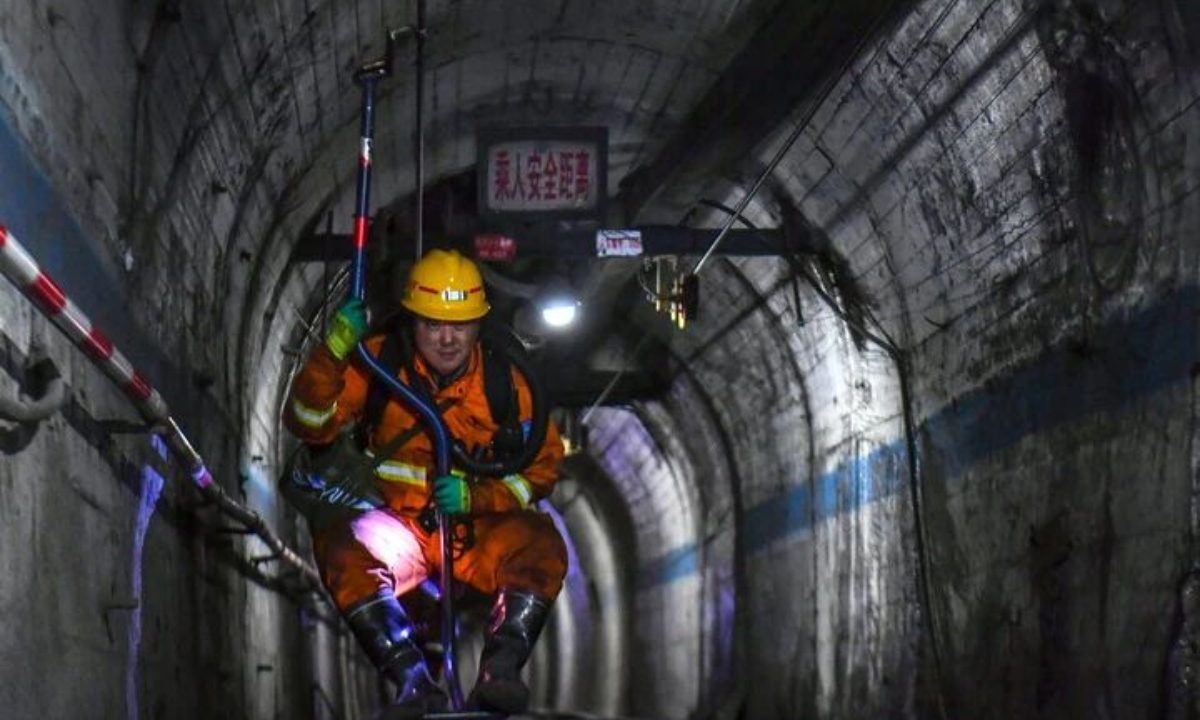
China is stepping up the intelligent transformation of its high-risk coal mines, as the country's top economic planner and energy regulator rolled out a new development plan during the 15th Five-Year Plan (2026-30) period that calls for greater use of artificial intelligence (AI) and robots in hazardous underground operations.
The National Development and Reform Commission and the National Energy Administration (NEA) on Monday announced a plan that emphasizes the need to strengthen coal's role as a foundational and balancing pillar in China's energy supply system while accelerating high-quality development in the sector, according to the NEA's website.
According to the plan, China will deepen its "AI Plus" initiative in the coal industry by collecting and integrating AI-related data and expanding the use of AI across key scenarios such as exploration and design, construction and production, operation and maintenance, and safety management.
The plan also calls for faster development of specialized large-language AI models for the coal sector, with breakthroughs needed in intelligent perception, autonomous decision-making and intelligent control. It also emphasizes the need to establish a number of pilot coal mines for the integrated application of AI, and improvements in coal mine safety.
The plan specifically targets intelligent upgrades at disaster-prone mines and those that have experienced major accidents, pushing for robotic substitution at hazardous posts, according to the document.
Industry observers said that the move signals a shift in China's coal mine automation efforts from pilot projects to large-scale deployment. High-risk tasks such as tunneling, inspection, rescue, roof support and blasting are emerging as priority areas for substitution by robots.
Hangzhou-based DEEP Robotics has been focusing on the use of quadruped robots for mine inspections and emergency rescue. In May, the company worked with the Zhejiang Provincial Emergency Management Department and other agencies to unveil its embodied intelligent equipment and conducted a live reconnaissance and rescue drill in a mine tunnel in Changshan, East China's Zhejiang Province, the company told the Global Times on Monday.
Using DEEP Robotics' Lynx M20 wheeled-legged robot as its mobile platform, it innovatively integrates large-language models and an onboard platform, and is equipped with a dual-spectrum pod, 5G module, edge computing unit, and other equipment.
Meanwhile, Lingbao CASBOT has formed a joint venture, to focus on the research and application of embodied intelligence robots for underground mining, according to the Beijing Daily. The company has since become involved in key processes such as rock drilling, blasting charge loading and support installation.
Such AI-powered equipment could significantly improve mine disaster warning and emergency response capabilities, helping mines transition to "less-manned" and "unmanned" operations and reducing human workers' exposure to danger, Lin Boqiang, director of the China Center for Energy Economics Research at Xiamen University, told the Global Times on Monday.
Lin said that robots have a clear advantage in dangerous tasks such as patrol inspections in 50 C deep shafts, gas leak detection, and heavy lifting. "For robots, these are exactly the jobs they should be taking on," he said.
Market research firm Zhiyan Consulting estimated that the market for mining robots grew to 2.85 billion yuan ($42.24 million) in 2025.
。

B | 包括近50位院士、80余位青年学者在内,来自政府、高校、科研院所、企业等机构代表2500人参会。 2026科学智能大会为期两天,两场全体会议、14场平行会议推出百余场高水平学术报告,大会紧扣“基础设施—范式创新—产业应用”三层逻辑,围绕基础研究、科技创新与产业创新融合、国际科技合作三大专题展开交流,并集中亮相一批科学智能(AI for Science,简称AI4S)领域重要成果。8月21日,2026科学智能大会在北京开幕。记者 孙自法 摄 “学术科协”科学智能专家委员会秘书长、科技导报社社长林润华主持21日全体会议表示,科学智能已成为加速科学发现、加快创新突破、支撑高水平科技自立自强的关键。

C | 中国科学院院士、北京大学数学科学学院讲席教授鄂维南作报告指出,科学智能已进入“下半场”,重心正从人工智能方法探索,转向人工智能时代科研体系的系统性变革。 他认为,当前科研体系以论文发表为核心衡量标准,客观上稀释了“自由探索”与“科学发现”的初心;而人工智能正在重塑知识获取、理论计算和实验工具,通过平台化科研与“干湿闭环”大幅提升探索效率。8月21日,2026科学智能大会全体会议上,鄂维南院士作学术报告。记者 孙自法 摄 面向未来,需要推动科研平权化,以产业视角打通“人才、创新、市场、资金”等环节,建立低成本、高效率的科研工具与成果转化体系,让有能力的个人和团队都能参与科技创新,同时切实保护自由探索这一颠覆性创新的核心要素。 深势科技创始人兼首席科学家、北京科学智能研究院理事长张林峰作报告说,科学智能的落地需要基础设施先行——包括科研基础大模型、高质量科学数据与语料、自主实验室等系统性建设。

D | 他表示,科学智能要真正服务于具体科学问题,从方法探索走向科研实践,形成经得起科研实践检验的成果。 在中国工程院院士、之江实验室主任、阿里云创始人王坚看来,词元(Token)化的科学数据对科学智能至关重要,在人工智能赋能科学研究过程中,多学科交叉、跨学科融合的门槛将会被更多科研工作者跨越。 中国科学院院士、东南大学毫米波国家重点实验室主任崔铁军介绍信息超材料新体系,剖析该技术在AI时代支撑三大关键基础设施的应用方向,展现出科技创新和产业创新深度融合的示范价值。 中国科学院院士、昌平实验室主任谢晓亮以具体的成果案例,分析大数据和人工智能对生物医学的研究范式带来巨大转变指出,精准生物大数据和科学原是人工智能赋能生物医药的关键。8月21日,2026科学智能大会全体会议上,谢晓亮院士作学术报告。记者 孙自法 摄 当天全体会议上,北京市科委、中关村管委会发布“北京市首批人工智能赋能科学研究典型案例”,涵盖基础研究到产业应用,系统展示了北京市在人工智能赋能科学研究关键要素上的创新成果。 海淀区发布“中关村(海淀)科学智能创新集聚区”,积极构建与新型科研范式相匹配的空间格局和创新生态,打造从源头创新到产业化落地的完整创新链条。未来,海淀区将通过集聚区的建设,建成具有国际影响力的科学智能发展新地标。 2026科学智能大会体现中国在人工智能赋能科学研究领域迈出了坚实一步,其由“学术科协”科学智能专家委员会提供学术指导,中国科技发展基金会、北京科学智能研究院共同主办。
Current article:http://www.xiongpeiduanlouduoennongleng.cyou/30r/34n.xls
Published on:13:12:11


